Article Directory
The Space Coast's Hype Train Needs a Reality Check
Florida's Space Coast is celebrating a record-breaking year for rocket launches. One hundred orbital launches from Kennedy Space Center (KSC) is nothing to sneeze at. But before we uncork the champagne, let's dissect these numbers and see if the hype matches the reality.
Parsing the Centenary
Col. Brian Chatman, commander of Space Launch Delta 45, boldly stated, "We are breaking records across the board," and that "100 launches is a complete game changer on the Space Coast.” Okay, Colonel, but breaking records doesn't automatically equal a "game changer." A change for whom exactly? Is this about scientific advancement, economic impact, or just bragging rights?
The article points out that this milestone was initially expected in 2024 but was delayed due to hurricanes and "Falcon 9 rocket mishaps." This delay is glossed over, but it's a crucial detail. Were those mishaps due to unforeseen technical issues, or were they indicative of a rushed launch schedule prioritizing quantity over quality? The article doesn't say, but I suspect the latter.
Chatman also claims that the Space Coast has launched "more...than the entire world combined — if you take Vandenberg out of the count." This is a classic case of statistical manipulation. Sure, if you cherry-pick your comparison group, the numbers look impressive. But why exclude Vandenberg? It's a US-based launch site, contributing to the overall US space program. It's like saying you're the best runner in the world... except if you don't count all the other good runners.
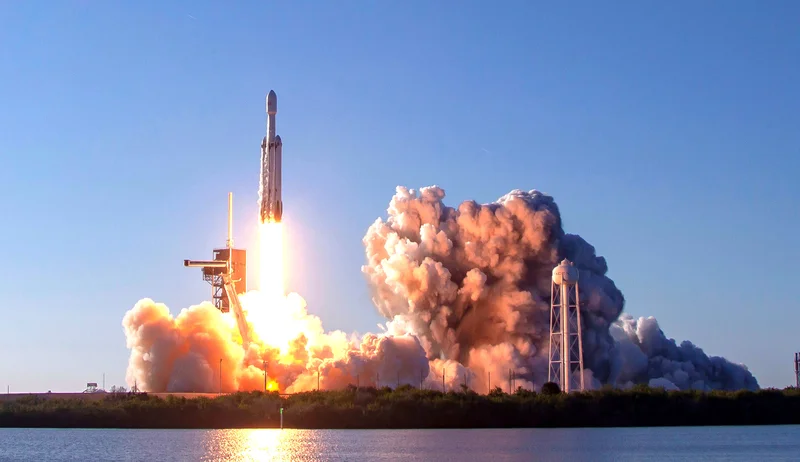
It's also worth noting that many of these launches are for Starlink. While Starlink provides internet access to underserved areas, it’s also a private, for-profit venture owned by Elon Musk. Are we celebrating a public good, or a successful business model? (Perhaps both, but the distinction matters.) SpaceX launches 29 Starlink satellites on Falcon 9 rocket from NASA’s Kennedy Space Center – Spaceflight Now
The Von Braun Fallacy and the Future
The piece quotes Florida Tech's Robert Taylor, who says, "During the shuttle years, they dreamed of 100 flights a year.” He then adds, "Right now, rockets are leading the way. Wernher Von Braun would be a happy man.” This is a dangerous comparison. The Space Shuttle program, while ambitious, was plagued by cost overruns, safety concerns, and ultimately, its own obsolescence. (The program cost over $200 billion.) Just because Von Braun would be happy doesn't mean we should be blindly following the same path.
Chatman optimistically projects 100 to 120 launches in 2026, and potentially up to 300 launches per year by 2035-2040. That projection raises serious logistical questions. Can the Space Coast handle that level of activity without compromising safety and environmental standards? What about airspace congestion, potential for accidents, and the impact on local communities?
The article mentions that the Space Force, Space Florida, and other agencies are "working very closely on what this future looks like." I'd like to see more specifics. What are the concrete plans to address these potential challenges? What are the contingency plans if those challenges become insurmountable? Where's the detailed, data-driven risk assessment?
And this is the part of the report that I find genuinely puzzling. It's all rosy projections and celebratory quotes, but very little in the way of critical analysis. Where are the dissenting voices? Where are the independent assessments? It feels like we're being sold a narrative, not informed about a complex reality.
Consider this: the article mentions a "frequent flier Falcon 9" rocket that was grounded twice in 2024 due to malfunctions. This detail is buried, almost as an afterthought. But it's a red flag. If the push to increase launch cadence leads to cutting corners on maintenance and safety, the entire program could be jeopardized.
So, What's the Real Story?
One hundred launches is a milestone, yes. But let's not mistake activity for progress. The Space Coast is experiencing a boom, but it's a boom fueled by commercial interests and optimistic projections. Before we declare a new space age, let's demand transparency, accountability, and a healthy dose of skepticism. Because hype, like a rocket, can quickly burn out.