
Article Directory
The Caribbean's Climate Debt Trap: A Balance Sheet of Recurring Catastrophe
The Illusion of Recovery
Headlines paint Hurricane Melissa as a one-off disaster, but that's a convenient fiction. The reality, as the data clearly shows, is that Melissa landed on islands already drowning in the wake of previous storms, a point often glossed over in the immediate aftermath. Jamaica, Cuba, and Haiti weren't stable systems; they were nations teetering on the edge.
Consider Jamaica: still reeling from Hurricane Beryl in 2024. The Rural Agriculture Development Authority estimated $15.9 million in damages, affecting 45,000 farmers. That's not just farmland; that's livelihoods. And then Melissa arrived, effectively kicking the legs out from under an already unstable recovery.
Cuba's situation is even starker. A power grid collapse during Hurricane Oscar in 2024 left 10 million in the dark. Melissa didn’t just damage infrastructure; it attacked a system already in critical condition.
And then there's Haiti. To call its pre-Melissa situation "fragile" is a gross understatement. Years of compounding disasters – hurricanes, political instability, gang violence, cholera, hunger – had already left over half the population needing humanitarian aid. Melissa was less a storm and more a coup de grace.
The core problem isn’t just the storms themselves; it’s the intervals between them. They're shrinking to the point where full recovery becomes an impossibility. This isn't just bad luck; it's a systemic failure in how we approach disaster recovery. As explored in No time to recover: Hurricane Melissa and the Caribbean’s compounding disaster trap as the storms keep coming, the Caribbean faces a compounding disaster trap.
The Vicious Cycle
The article correctly identifies a "compounding disaster trap," a self-reinforcing cycle driven by infrastructure collapse, economic debt spirals, and social erosion. Let's break that down.
Infrastructure collapse isn't just about broken power lines; it's a cascading failure. Power goes out, water pumps stop, communications fail, hospitals shut down. This happened in Grenada after Hurricane Beryl and Dominica after Hurricane Maria. It's not an outlier; it's the new normal.
The economic debt spiral is equally insidious. Countries exhaust their reserves on one recovery, borrow to rebuild, and then get hit again while still paying off the debt. Hurricane Ivan cost Grenada over 200% of its GDP. Maria cost Dominica 224%. Dorian cost the Bahamas 25%. Each storm adds to the debt burden, lowers credit ratings, and makes future borrowing even more expensive. It's like a financial boa constrictor.
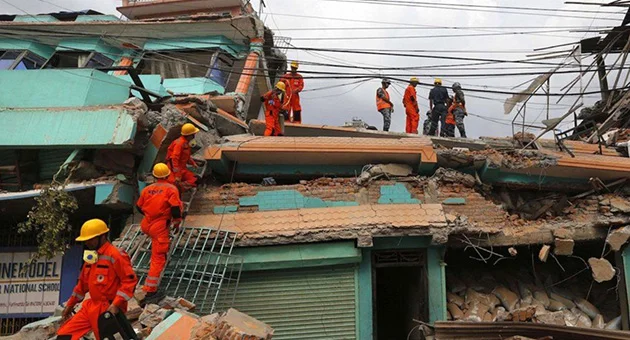
Social erosion is perhaps the most overlooked aspect. After Maria, over 200,000 people left Puerto Rico for the U.S. mainland. Nearly one-quarter of Dominica's population left after the same storm. These aren't just numbers; they're broken communities, lost skills, and deepened trauma. The very social fabric needed to manage recovery is being torn apart.
I've looked at hundreds of these analyses, and the way social erosion is often treated as an afterthought is genuinely puzzling. It's arguably the most critical factor, as it directly impacts a nation's ability to rebuild.
The fundamental flaw, as the article points out, is that recovery models are broken. They apply one-size-fits-all solutions to crises unfolding across multiple layers of society. The solution, according to the author, lies in adaptive recovery at all levels, from household to global.
At the household level, this means direct cash assistance and long-term, community-based mental health services. At the community level, it means investing in farmer cooperatives, neighborhood associations, and faith groups. At the infrastructure level, it means decentralized power grids, natural storm barriers, and strong enforcement of modern building codes.
But none of this is possible without addressing the debt trap. Hurricane clauses in bond agreements can automatically pause debt payments when disasters strike. Comprehensive debt-for-climate swaps can reduce existing debt in exchange for commitments to climate adaptation. Pre-positioned climate finance can provide funding before storms hit, not months later. The current system, controlled by global lenders and donors, requires countries to "prove" their losses after a disaster, often resulting in months of delay.
A False Sense of Security
The author offers a few solutions. Cash transfers, community investment, infrastructure improvements, and debt relief. All perfectly reasonable, but the scale of the problem dwarfs these proposed fixes.
Take the idea of "stronger building codes." Sounds great, but who's going to enforce them? And how do you retrofit existing structures? It's a massive undertaking with no easy answers.
Similarly, "decentralized power grids" are a step in the right direction, but they're not a panacea. They require significant investment and ongoing maintenance.
And let's not forget the human element. Even with the best infrastructure and financial support, recovery requires resilience, determination, and a sense of hope. After repeated disasters, that can be hard to come by.
The Caribbean as Canary
The author concludes with a stark warning: what's happening in the Caribbean is a glimpse of what's coming for coastal and island communities worldwide. We can either learn from their experiences and redesign disaster recovery now or wait until the trap closes around everyone.
But is anyone really listening? The data suggests otherwise. The response to each disaster is reactive, not proactive. We offer aid after the storm, not before. We focus on immediate needs, not long-term solutions. And we ignore the underlying vulnerabilities that make these communities so susceptible in the first place.
A Balance Sheet Written in Red Ink
The author frames the Caribbean situation as a warning for the rest of the world. But the data suggests it's more than that. It's a self-fulfilling prophecy. Unless we fundamentally change how we approach disaster recovery, the Caribbean will remain trapped in a cycle of recurring catastrophe, and the rest of the world will eventually follow.